Jose Tello – 3D Artist Leader
Introduction
Adapting iconic 2D animated characters into three-dimensional space is one of the most delicate challenges in the development of games based on well-known licensed properties. These characters were originally designed to work within a flat visual language, where every line, proportion, and expression is crafted for specific camera angles. When bringing them into an interactive 3D environment, the challenge is not simply to recreate their appearance, but to preserve their visual identity while ensuring they function from any angle and in real time within a game engine.
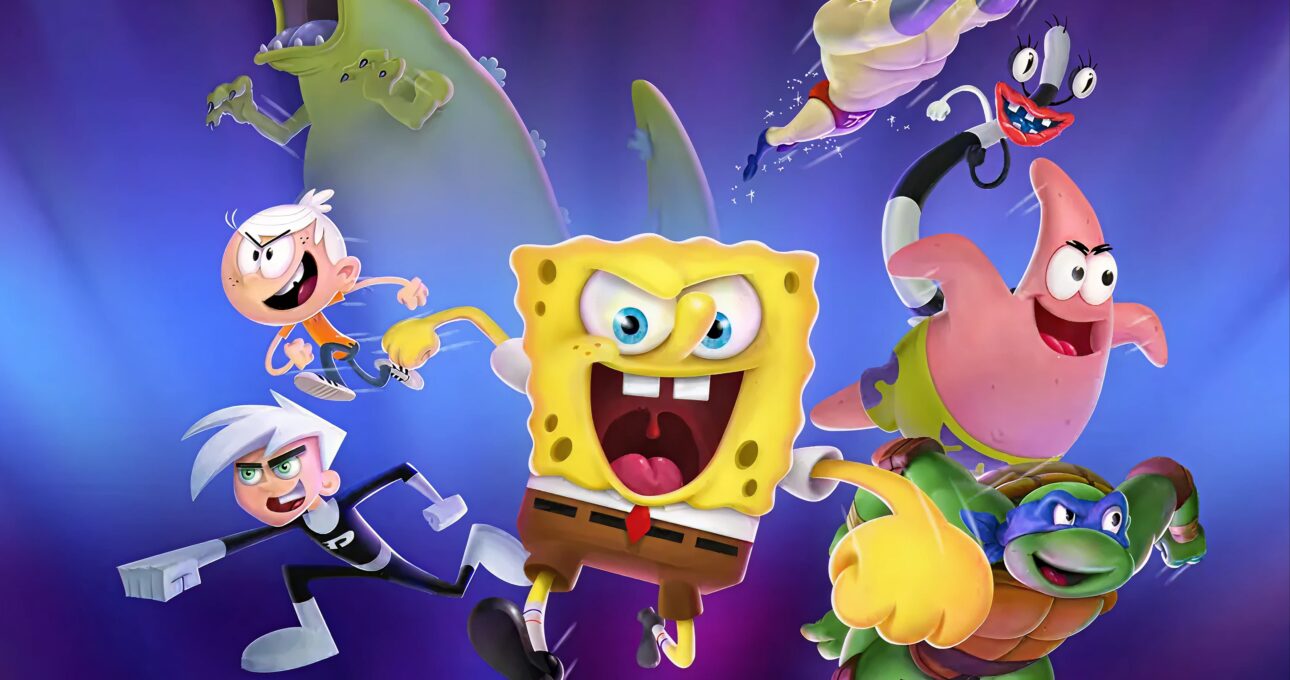
In Nickelodeon All-Star Brawl, the objective was to bring legendary characters from multiple animated franchises into a competitive console fighting environment while preserving their distinctive style without compromising game performance. To achieve this, at GameCoder Studios we developed a pipeline focused on silhouette preservation, respect for the original artistic style, and optimizing each model to meet the strict technical constraints.
The Challenge
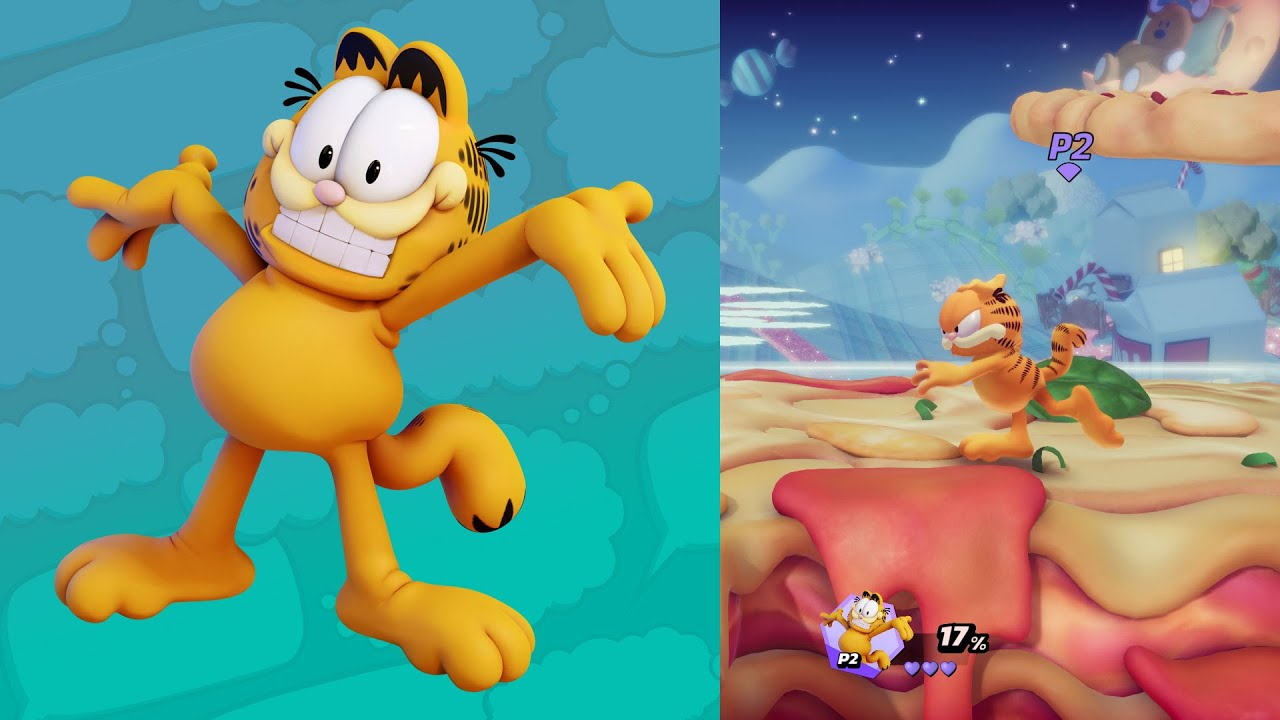
The primary hurdle in adapting legendary 2D IP was the “dimensional translation”—ensuring that characters like Garfield or SpongeBob, who were designed to be viewed from specific hand-drawn angles, retain their soul when rotated in a 3D space.
- Proportional Integrity: Ensuring that depth and perspective do not distort the character’s iconic silhouette.
- Console Optimization: Balancing high-fidelity detail with a strict budget of under 50,000 triangles to ensure seamless performance across all console platforms.
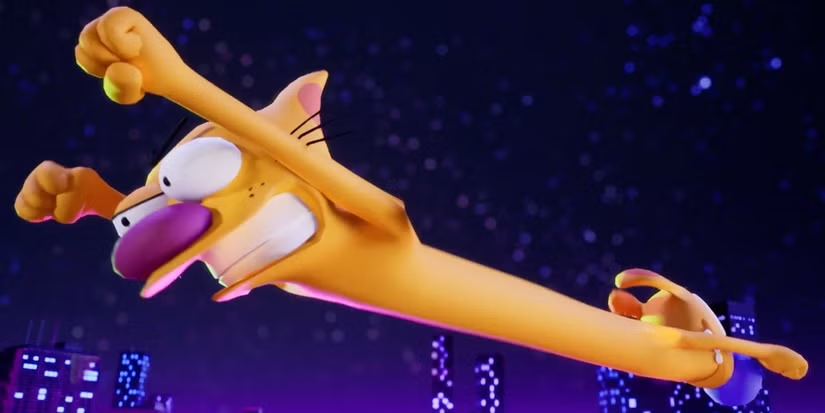
- Aesthetic Heritage: Matching the specific art styles of diverse franchises, ranging from the grunge of TMNT to the whimsical lines of CatDog.
Key Criteria
To achieve 100% fidelity, GameCoder Studios implemented a rigorous five-stage production pipeline:
- Concept Analysis: A deep dive into 2D style guides, analyzing every angle to understand how the character’s volume should behave in motion.
- High-Poly Sculpting: Crafting a primary digital sculpture to capture the “essence”—the weight, expression, and unique physical traits.
- Strategic Retopology: A meticulous process of rebuilding the mesh to maintain original volumes while drastically optimizing the triangle count for engine efficiency.
- UV Mapping: Creating efficient UV layouts to maximize texture density and clarity.
- Texture & Pattern Integration: Applying color palettes and shaders that mirror the original animation cells.
The Solution
Our approach centered on Silhouette Preservation. By focusing first on the primary volumes, we ensured the character was recognizable from a distance before a single detail was sculpted.
Technical Precision: To combat the common issue of “3D bloating,” we configured virtual camera lenses during the sculpting phase to match the focal lengths often used in traditional animation. This minimized perspective distortion, keeping the models “on-model” regardless of the camera angle.
Optimization & Fidelity: We established a standardized base polygon count for main characters. This allowed us to distribute detail where the player sees it most—such as faces and articulated joints—while keeping the total count well within the 50,000-triangle limit.
Authentic Texturing: Aesthetics were treated as a non-negotiable priority. We utilized a “Color-Cloning” technique, sampling directly from original 2D source material to ensure that the 3D shaders reacted to light in a way that felt consistent with the classic series’ art direction.
Results
The final 3D assets for Nickelodeon All-Star Brawl stand as a testament to technical discipline and artistic respect.
- Fidelity: Characters are indistinguishable from their 2D counterparts in terms of shape, color, and personality.
- Performance: Optimized topology resulted in zero performance bottlenecks on console, allowing for fluid, high-frame-rate combat.
- Impact: The models maintain their iconic silhouettes even in high-speed motion, providing a nostalgic yet modern experience for the players.