
Marcel Stockli, Lead Engineer
Introduction
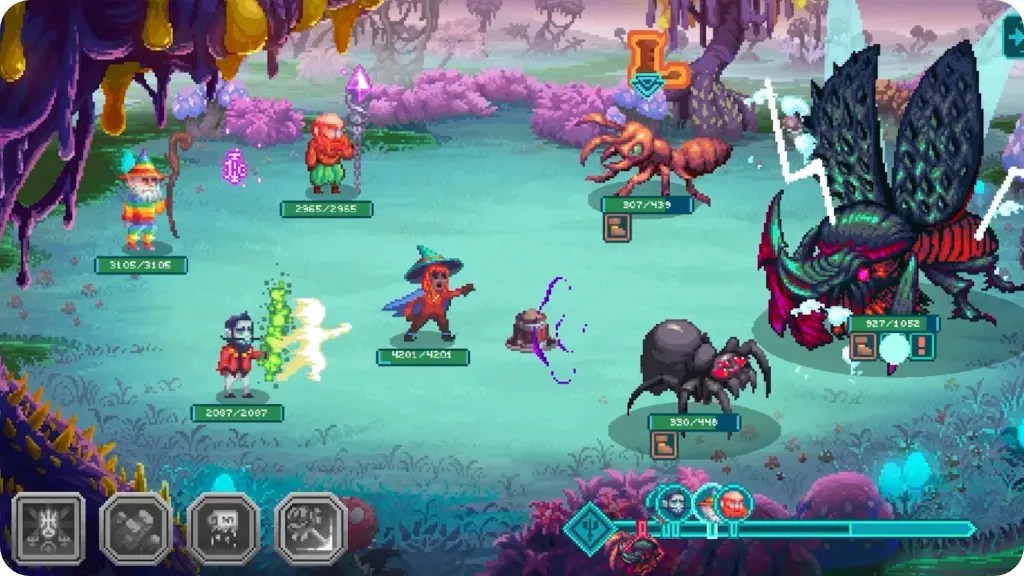
GameCoder partnered with Bisonic to undertake an ambitious project: developing a full-scale MMORPG based on the Forgotten Runes IP. Designed as a nostalgic pixel art experience accessible directly through a web browser, Forgotten Runiverse supports a massive player base and complex persistent systems without the friction of a traditional download.
The Challenge
Building a Massively Multiplayer Online game is widely considered the “final boss” of game development. Doing so within the constraints of a web browser—while maintaining the depth of a traditional desktop MMO—presented a monumental technical hurdle.
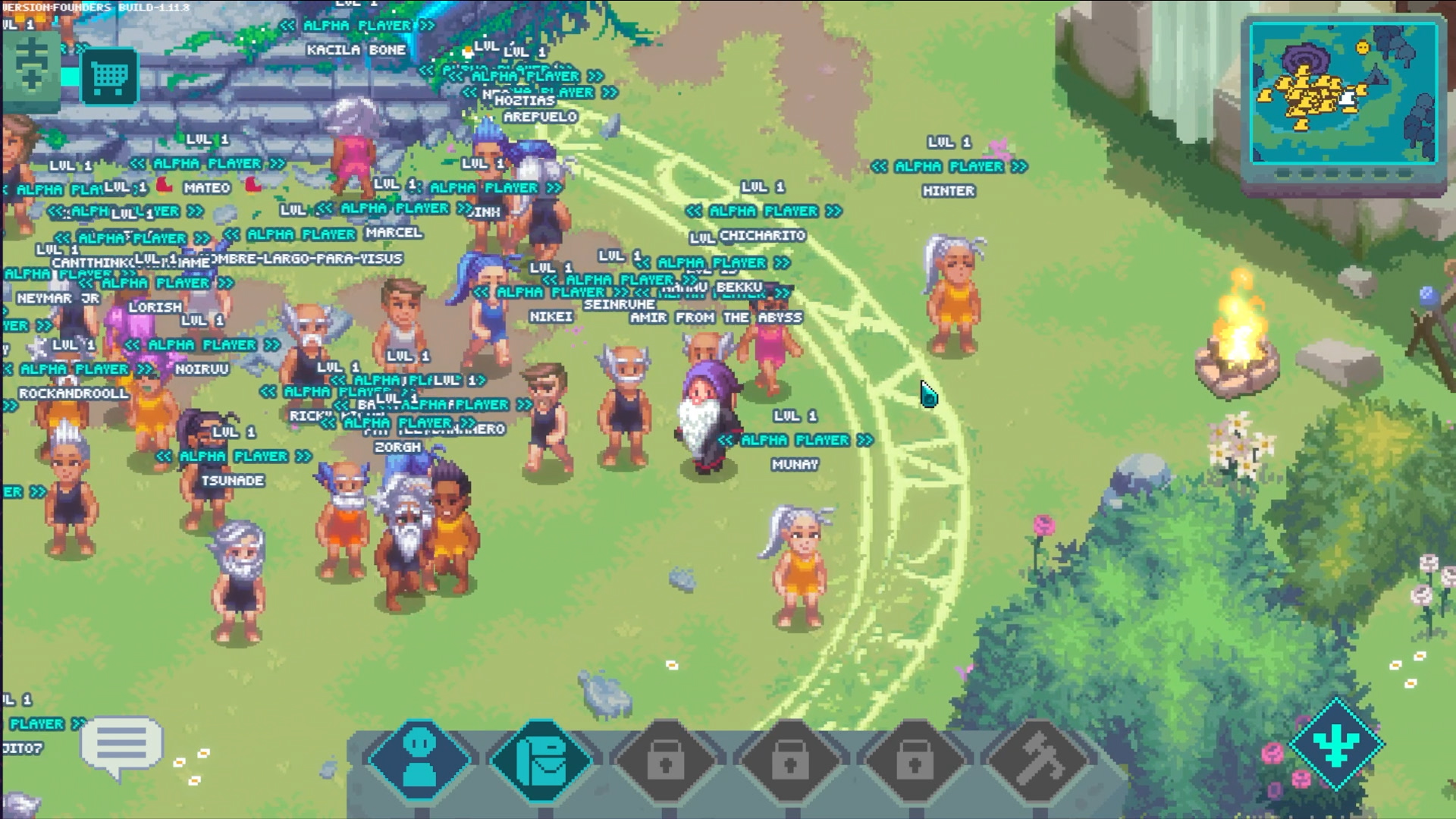
- The Scale of Ambition: The goal was to support 10,000+ Concurrent Users (CCU) within a single, unified realm, avoiding the fragmented “sharding” common in older MMOs.
- Platform Constraints: As a web-based title, the game had to be highly optimized for memory management to prevent browser crashes while delivering a seamless, high-fidelity pixel art experience.
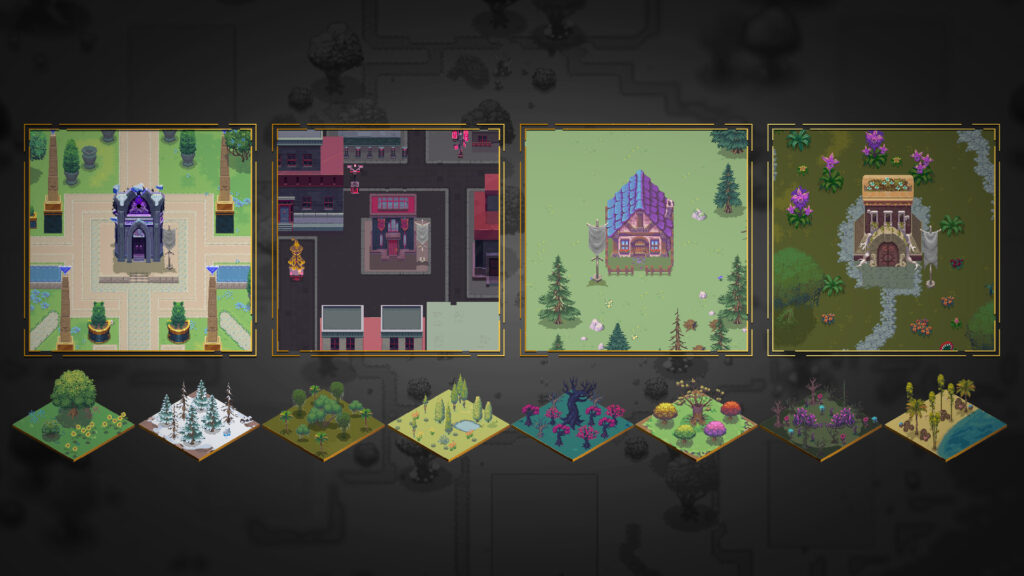
- The “Paris-Sized” World: Creating a continuous, massive landmass that feels alive and populated required a sophisticated streaming architecture.
- Dynamic Economy: A player-driven economy requires real-time monitoring and anti-inflationary measures to remain sustainable over years of live service.
Key Criteria
- Zero-Install Friction: The game must be instantly playable via a URL, supporting both desktop and mobile browsers.
- Scalable Infrastructure: The backend must dynamically spin up resources to handle massive player influxes during world events.
- Collaborative Pipeline: With a world this large, the level design and art teams needed to work in parallel without bottlenecking the engineering department.
The Solution
To meet these requirements, GameCoder Studios deployed a multi-disciplinary team of 50 experts (including 15 engineers and 10 pixel artists) over a 3-year development cycle.
1. The Rendering Engine (Modified Phaser 3)
While Phaser 3 was used as the foundation for its robust HTML5 capabilities, our engineering team heavily modified the core engine. These optimizations allowed for the rendering of thousands of on-screen entities, complex weather effects, and seamless tile-loading without frame drops.
2. Tech Stack
We built a “best-in-class” stack to balance performance with rapid scalability:
- Multiplayer Architecture: Utilized Colyseus for authoritative server-side logic, customized to support “Seamless Traveling” between world zones.
- State Management: Integrated React + Redux for the UI layer, allowing for complex menus (Inventory, Crafting, Skill Trees) to run natively alongside the game canvas.
- Database & Sync: MongoDB served as the primary data store, while Redis was utilized for high-speed event synchronization and real-time world state updates.
- Infrastructure: Initially deployed on AWS, we successfully migrated the entire architecture to OVH Cloud. This move provided granular control over bare-metal instances and significantly optimized operational costs.
3. World Building & Tooling
To manage a world the size of Paris, we developed a proprietary workflow:
- Tiled Integration: The world was segmented into 500×500 meter tiles, allowing level designers to work simultaneously on different sectors.
- Live Dashboard: We built a custom “God-View” dashboard for game designers, enabling them to adjust drop rates, NPC behaviors, and economic variables in real-time without requiring a server reboot.
Core Features & Gameplay Systems
The result is a fully featured MMORPG experience that rivals desktop titles:
- Living World: Farming, housing with deep decoration systems, and land management.
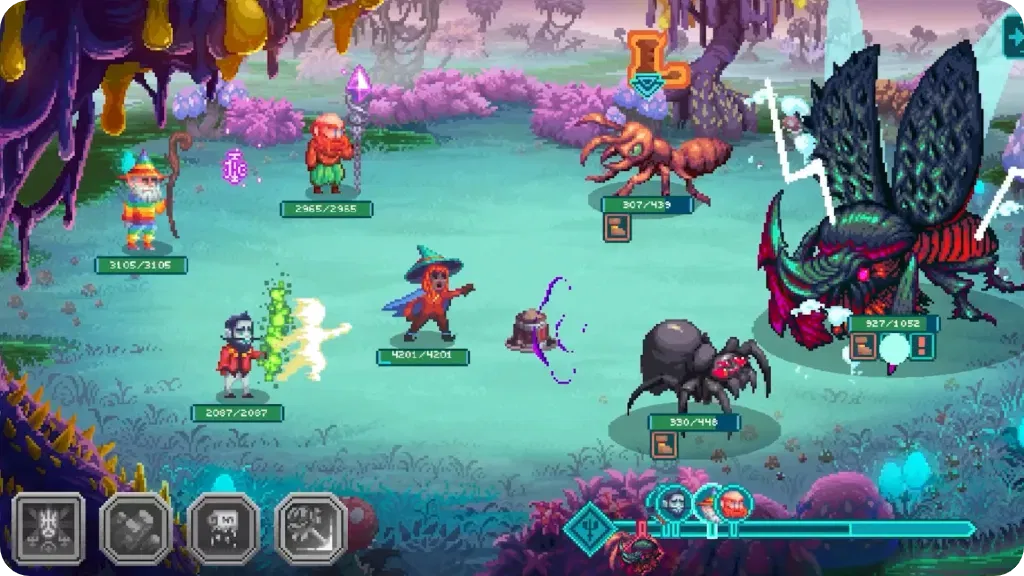
- Combat & Progression: Active real-time combat, 10 unique dungeons, and specialized class equipment.
- Social & Competitive: Quest systems, mounts, and a robust PVP system including ranked ladders and tournaments.
Results
After three years of intensive development, Forgotten Runiverse stands as a benchmark for web-based gaming:
| Metric | Achievement |
|---|---|
| Codebase | 1,000,000+ lines of original code |
| World Size | Comparable to Paris City |
| Peak Performance | 9,000+ Peak CCU reached |
| Economy | 2,000,000+ unique items generated and traded |
| Architecture | Scaled to 200+ concurrent server instances |
Forgotten Runiverse successfully proved that with the right architectural approach, the web browser is a viable platform for the most ambitious and technically demanding genre in gaming.
