Natalia Campos Velázquez – VFX Artist
Building a cinematic for a video game is a different challenge than regular gameplay. The player is still moving through the world, the camera angle changes, and everything has to hold up from any direction. Nothing can be hidden. If an object is forgotten, the player will find it.
Take explosions with rocks as an example. Rocks carry colliders, which detect collisions with walls, floors, and other objects to sell the feeling that the rock is heavy and interacts with the world. But overdo them, or configure them incorrectly, and a rock can send the player flying across the map. Worse, the player can get stuck inside one and the game breaks. Extensive testing goes into making sure no player gets hurt by something that was only supposed to look impressive.
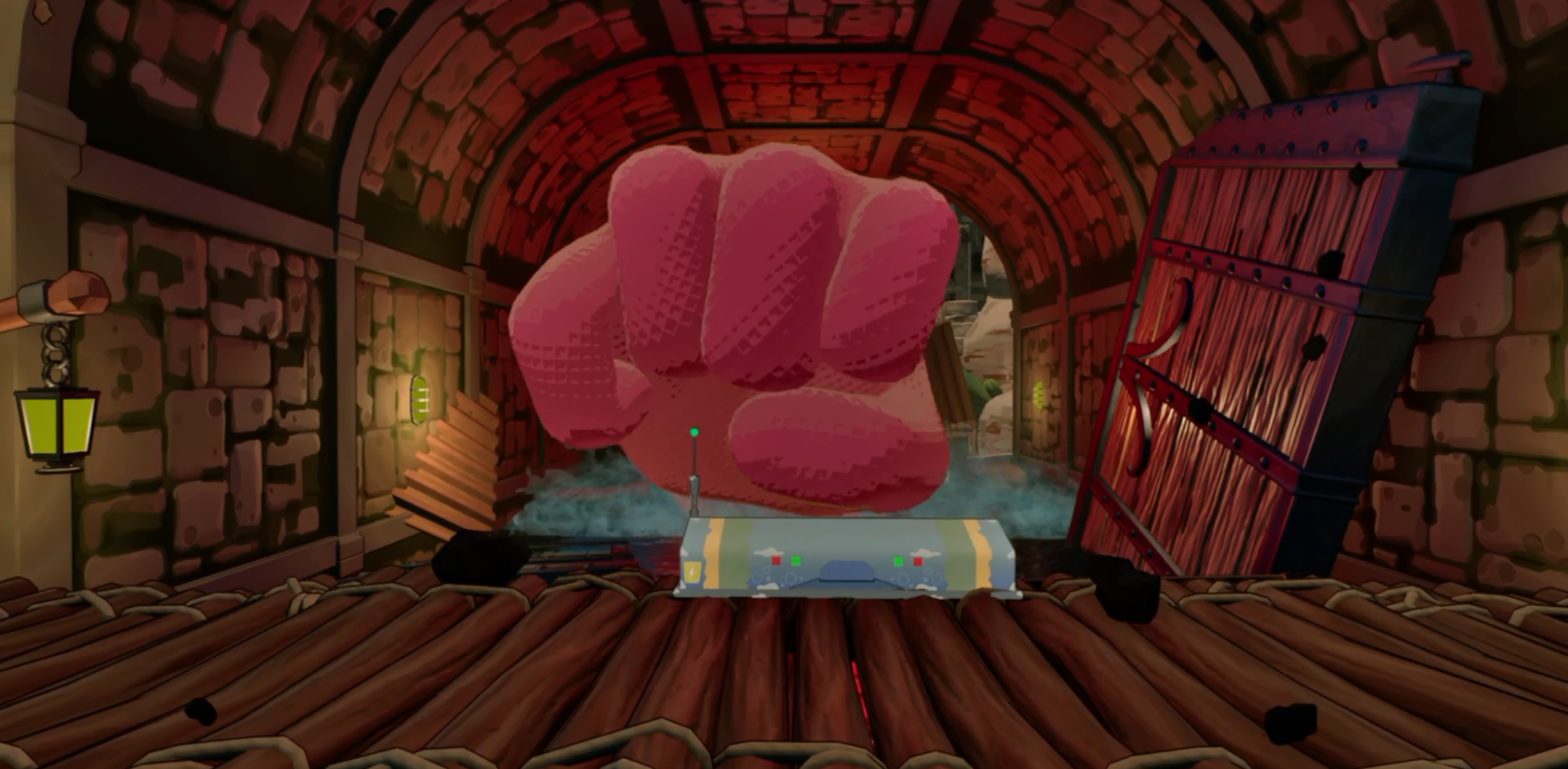
For Sponge Break, the team built a cinematic sequence in which a giant glove bursts through a door and floods the scene. What follows is a small glimpse into that process.
The Challenge
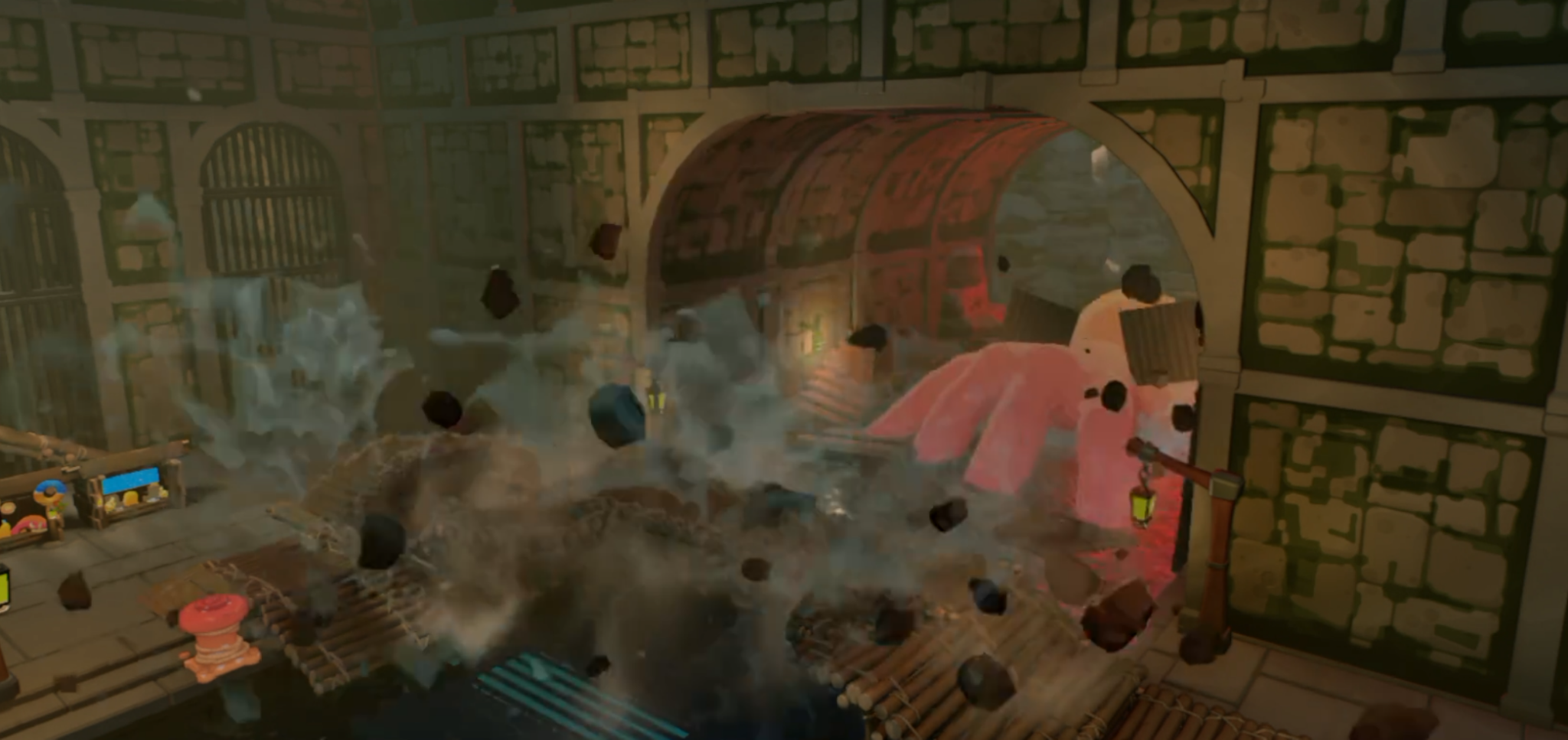
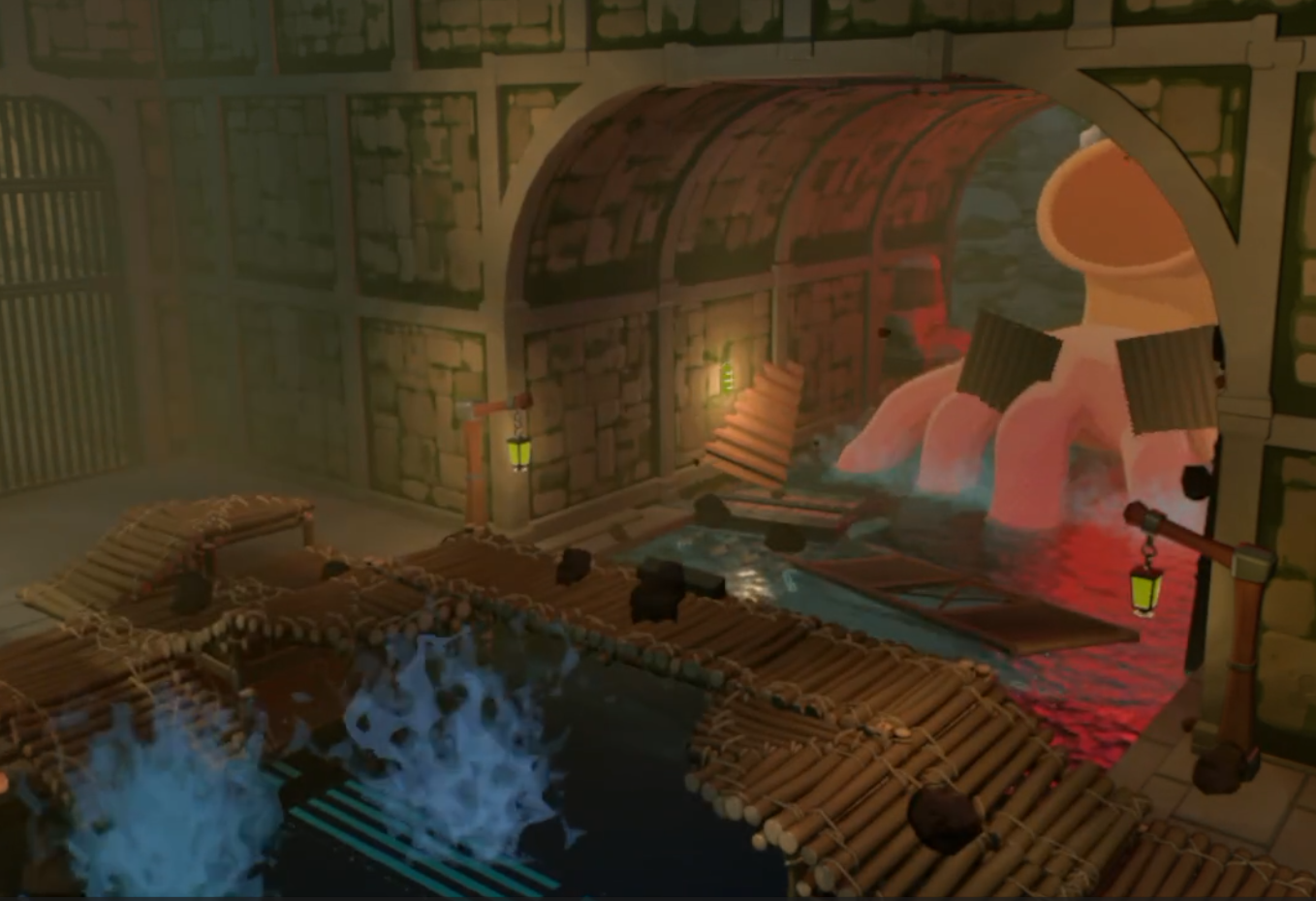
One issue surfaced early in testing. Running through the level as the sponge, the splashes looked great head on and vanished the moment the camera turned away. The scene was meant to feel like destruction: rocks falling, water splashing in every direction. Instead, the splashes disappeared at the worst possible moment.
Key Criteria
The effects had to remain visible from any angle, stay optimized so the game would not slow down, and be built so that three artists could work in the same scene simultaneously without breaking each other’s work.

The Solution
The vanishing splashes came down to how Unreal Engine manages performance. If the engine had to calculate every object in the scene at all times, the game would grind to a halt. Instead, Unreal uses a depth system that decides, based on the player’s distance, what is worth rendering. VFX are no exception. Niagara handles this through Fixed Bounds an invisible box around the effect that tells the engine how far the player can be before the effect stops being calculated. If the box is too small, the effect disappears the moment the player looks away. Increasing the bounds on the correct axis resolved it
The second challenge was memory. Water needs a high volume of splashes, and each one continues to live in the scene after it becomes invisible, quietly consuming memory. The fix was a pooling system: rather than spawning a new splash every time, the same one is reused once its animation completes. The difference between 1+1+1+1 and 1-0-1-0 is larger than it sounds.
The third was collaboration. When three people work on the same Sequencer timeline, something inevitably breaks. The solution was a master Sequencer with three child tracks each artist owns a track, changes stay isolated, and everything plays back together in the parent. No more stepping on each other.

Results
The effects held up from every camera angle. The pooling system kept memory usage in check without sacrificing the density of splashes the scene required. And the team was able to iterate independently, without conflicts.
There is far more to explain, but this is a small taste of how game scenes are built so that players can enjoy them without ever thinking twice about what went into them.